Pure calcium carbonate, made carbon negative.
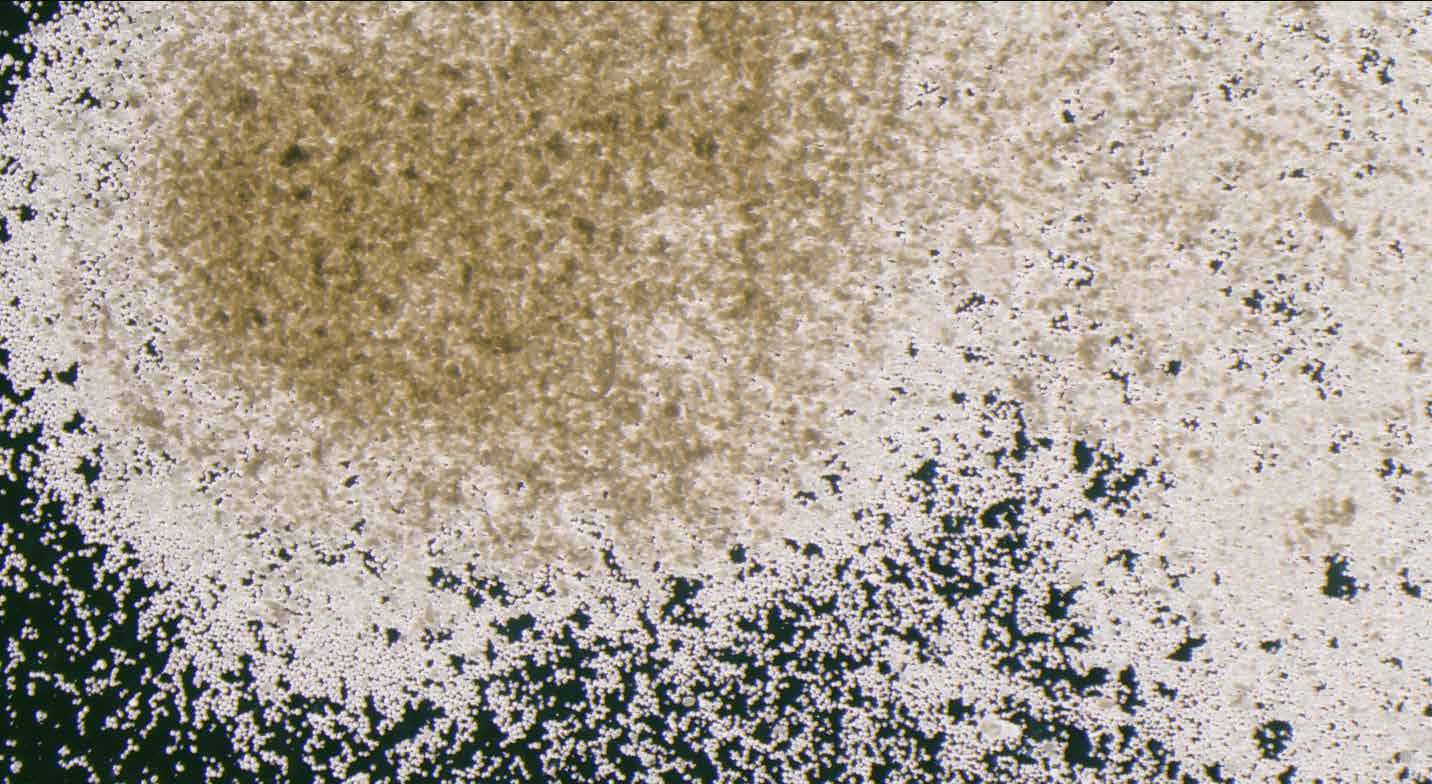
Our biotechnology leverages a novel bacterial metabolism to make pure calcium carbonate that is cleaner, cheaper, and more efficient. How? Using cave science.
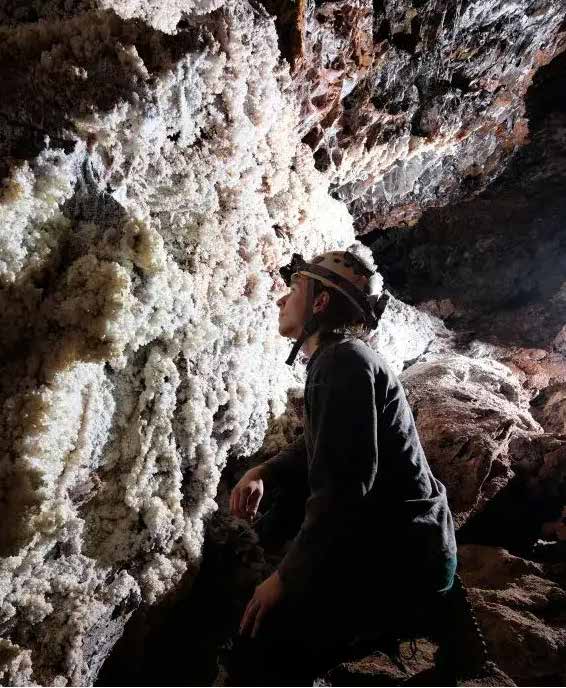
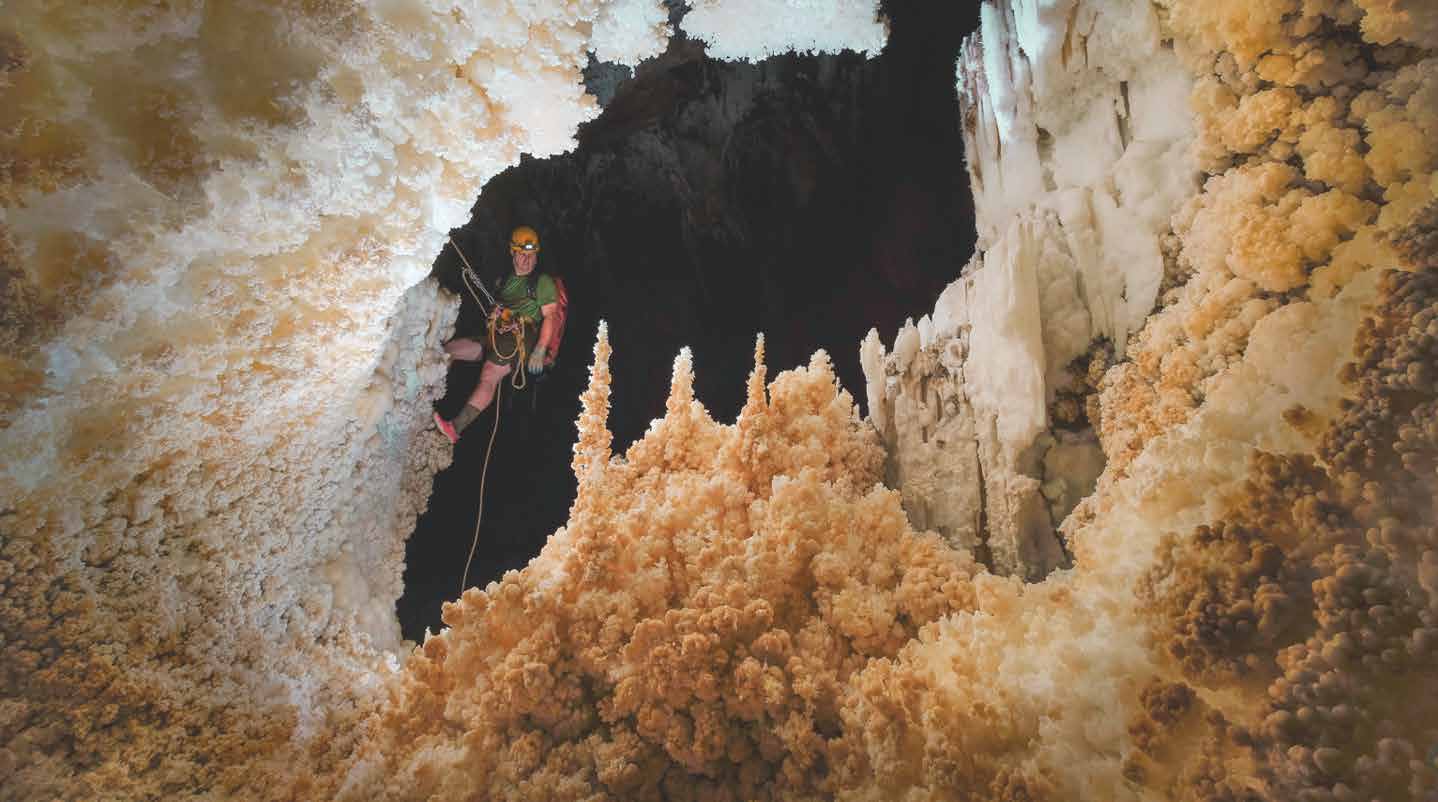
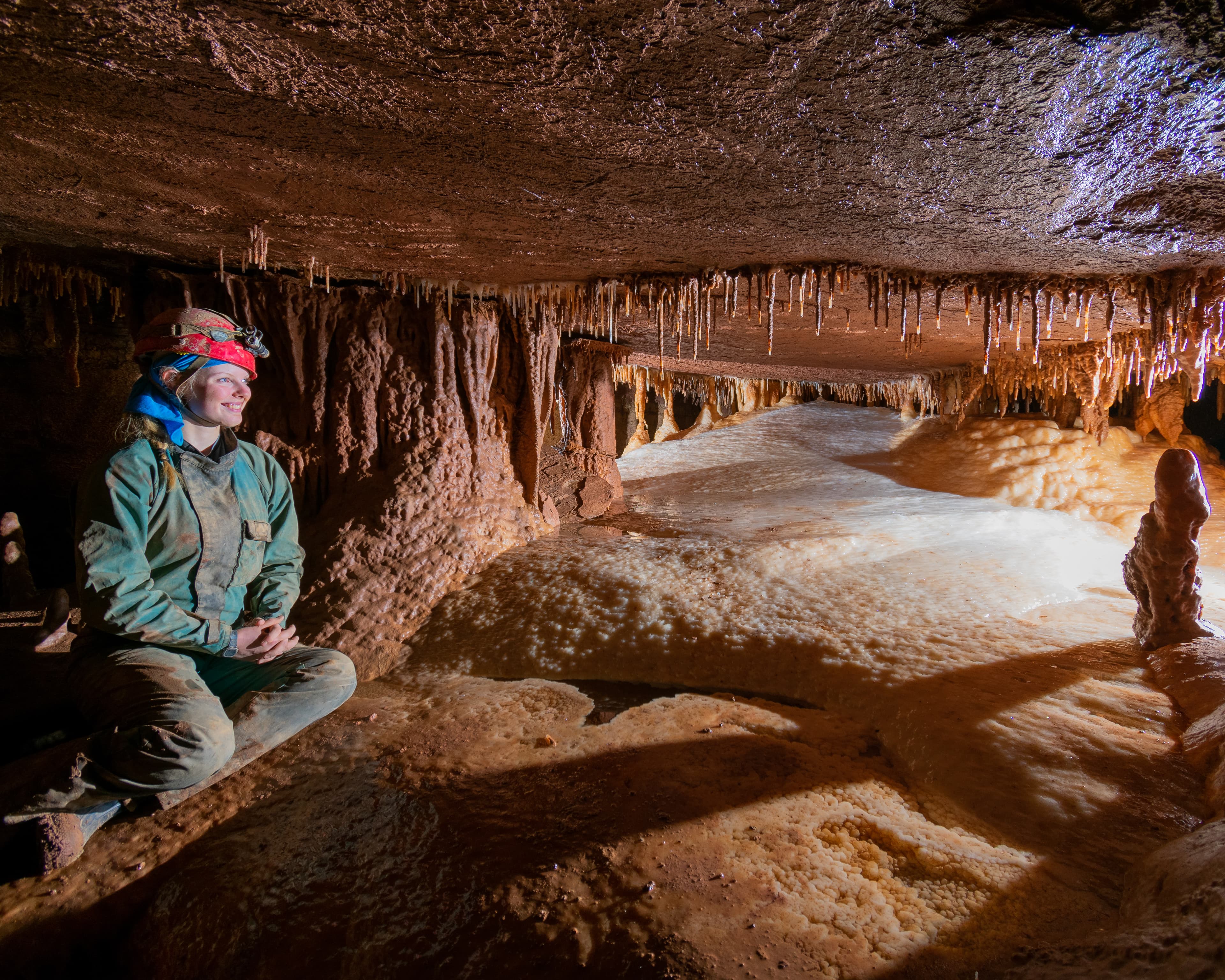
We explore microbial ecosystems deep within Alabama's 4,000+ caves, where bacteria have precipitated minerals in the dark for millennia.
Turning cave chemistry into an engine of carbon negative materials.
We combine microbiology, geology, and materials science to produce calcium carbonate the way nature does, at industrial scale.
Cave science
Microbial ecosystems from Alabama's caves, directing biomineralization with precision.
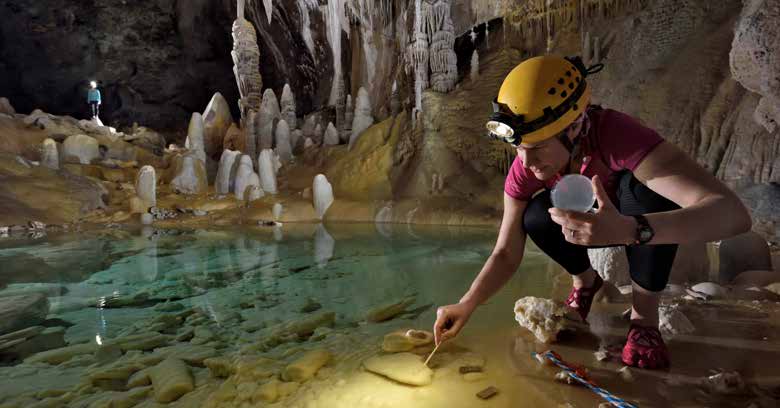
Biomineralization
A bacterial process that manufactures pure CaCO3 from atmospheric CO2, in bioreactors that scale by adding tanks.
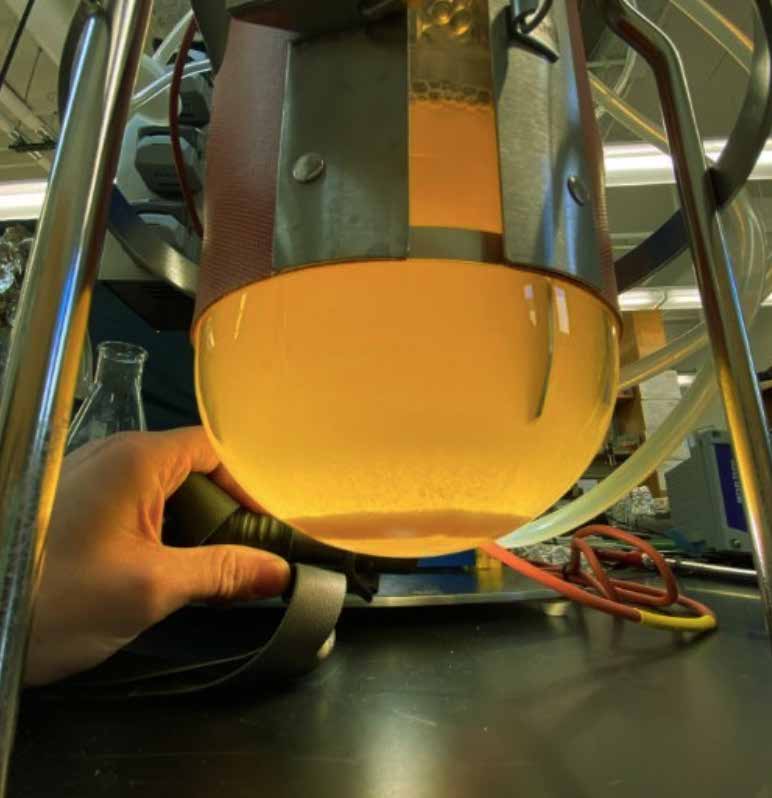
Carbon capture
Every batch sequesters carbon, creating a carbon negative supply of industrial calcite.
There are three ways to make calcium carbonate.
Two of them start by digging up limestone. Ours starts with the carbon already in the air. That is what makes mPCC carbon negative, and what lets us control the crystal and build the plant wherever the customer is.
Mined
- Feedstock
- Limestone cut out of a quarry
- Process
- Blasted, crushed, then ground down to size
- Particle control
- Limited. The shape and the spread are whatever the mill leaves behind
- GHG footprint
- Emissive. Quarrying, hauling and grinding all burn energy
- Where it can be built
- Wherever the deposit happens to be
Conventional
- Feedstock
- Limestone again, burned to lime first
- Process
- Kiln, then slaking, then recarbonation
- Particle control
- Good. Set by the chemistry in the reactor
- GHG footprint
- Emissive. Burning the limestone releases CO2 before any of it is recaptured
- Where it can be built
- Beside a kiln, usually on the site of a paper mill
Our mPCC
- Feedstock
- Atmospheric CO2, captured by bacteria
- Process
- Bacteria precipitate calcite the way they do underground, at ambient conditions
- Particle control
- Set biologically. The organism decides the crystal, so size and morphology are dialled in
- GHG footprint
- Carbon negative. Every gram locks CO2 away instead of releasing it
- Where it can be built
- Modular bioreactors, sited next to the customer
Who buys calcium carbonate, and what they do with it.
It goes into more than most people expect. Paint is where we start, since that is the application the NSF is funding. The rest of this list is where the same material already goes.
Paint and coatings
An extender that carries opacity, so a formulation needs less titanium dioxide. Particle size sets the sheen and the way the paint flows.
Plastics
Filler in PVC pipe and profile, polyolefin film and masterbatch. It adds stiffness and dimensional stability while displacing resin.
Paper
Filler and coating pigment. It brings brightness, opacity and a printable surface at a lower cost than fibre.
Cosmetics
Bulking and oil absorption in pressed powders and foundations, and a mild abrasive in toothpaste.
Drug delivery
An antacid and calcium source in its own right, a tablet excipient, and a carrier for controlled release, where purity and particle size govern the dose.
Adhesives and sealants
A reinforcing filler in caulks, sealants and rubber that controls viscosity and stops a bead from slumping.
Food and supplements
Calcium fortification, anti-caking and acidity regulation, at food grade purity.
Construction and agriculture
An additive in cements, mortars and joint compounds, and a soil amendment that lifts pH on acidic ground.



Making a cleaner, cost effective calcium carbonate, for us all.
It's not just millions of dollars saved. It's also preserving the future of our planet and its critical ecosystems. As scientists and cavers, we're invested in a world where industry and environment work together.
Carbon negative
Every gram sequesters CO2
Millions saved
Lower cost production at scale
Pure CaCO3
Industrial grade calcite